

300 sustainability reports later, and I can’t stop thinking about accountability.
What can 'corporate accountability' even mean in this current political nightmare? Where’s the incentive? Will anyone bother? ARE WE DOOMED?
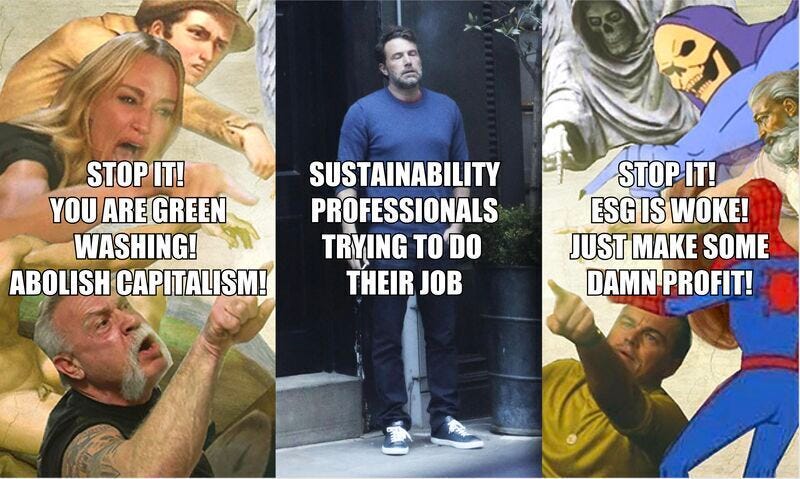
Sustainability reports are supposed to be about ‘accountability’ — a way for companies to transparently track their climate impact, own up to challenges, and show real progress.
Somewhere along the way, that purpose got murky.
Too many sustainability reports function as little more than marketing exercises — glossy PDFs filled with underwhelming commitments, selective data, and feel-good language. Rather than creating real accountability, they’re designed to impress investors, pacify stakeholders, and generate LinkedIn posts.
And yet, does any of this still matter in the short term? With U.S. climate regulation hanging by a thread and Washington having gone completely rogue, companies face less external pressure to report on sustainability at all.
When even mentioning ESG invites backlash, is anyone still paying attention?
Well, yes.
Even if U.S. regulators deprioritize sustainability disclosure, global standards and pressures (CSRD, financial institutions, supply chain expectations) will keep pushing for transparency. Many businesses still face compliance costs in global markets. The companies that treat sustainability reporting as a PR exercise now may pay the price when accountability inevitably comes back into focus.
So what does real accountability look like? And what role should sustainability communicators play in making sure reporting is more than just another branding exercise?
Let’s get into it.
Who’s actually keeping score?
For years, the push for corporate transparency has been driven in part by looming regulations — mandatory disclosures, SEC proposals, and global reporting frameworks like CSRD and SASB. But with the U.S. government deprioritizing climate action and ESG under attack, does ‘accountability’ still hold weight?
Within the U.S., perhaps not. The regulatory environment is, er, a bit unpredictable. And enforcement is unlikely to be a priority in the near term for any environmental regulation that manages to make it through this administration in tact. But globally? Absolutely.
Consider the broader forces still driving sustainability disclosure:
Financial markets still care → Investors and banks increasingly demand emissions data, risk assessments, and transition plans — not out of goodwill, but because climate risk is financial risk. Whether or not regulations force reporting, companies seeking capital will still need to show their cards.
The supply chain squeeze → European regulations like CSRD and CBAM mean U.S. companies exporting to the EU will be forced to disclose emissions and sustainability data, even if U.S. regulators don’t require it.
Consumer & employee pressure → Younger generations (both as consumers and workers) expect corporate sustainability commitments to be backed up with action. Reporting that rings hollow will be scrutinized and called out.
So yes, accountability still matters. While some companies may be tempted to scale back disclosures in the absence of immediate consequences, the long-term reality remains: companies that treat sustainability as a temporary PR play will be at a competitive disadvantage when accountability inevitably comes back into focus.
Now, let’s talk about what sustainability reports should be. Because when done well, they are a tool for accountability — and, yes, a powerful marketing asset, too.
If sustainability reporting is meant to be more than PR performance, what does real accountability look like?
At its core, accountability in reporting means owning the whole story — the progress, the setbacks, and the inconvenient truths. It means resisting the urge to spin every challenge into a win and, instead, treating sustainability reporting as what it should be: a tool for learning, improving, and building trust.
Here’s what sets real accountability apart:
Absolute transparency → Not just highlighting successes but openly addressing challenges. What goals weren’t met? What’s behind the shortfall? What’s the plan to fix it?
Clear, measurable targets → Vague commitments (‘we’re committed to action’) don’t cut it. Real accountability means time-bound, quantifiable goals and clear methodologies for tracking them.
Third-party verification → If a company is serious about its sustainability claims, it welcomes external scrutiny. Third-party assurance, independent audits, and alignment with global frameworks (GRI, SASB, TCFD, etc.) separate genuine accountability from self-reported spin.
Tracking year-over-year progress → Sustainability isn’t a one-time initiative. The best reports show consistent, comparable data over multiple years, making it clear whether a company is improving — or simply making new promises.
Engaging with stakeholders → Accountability means listening. Companies that incorporate feedback from investors, employees, suppliers, and communities — rather than dictating their own narrative — show they’re willing to be held to higher standards.
The most effective sustainability reports don’t just celebrate wins. They show where the company is falling short and what’s being done about it. When companies are honest about their struggles, their progress carries more weight.
For those of us shaping how sustainability stories are told, this raises an important question: what role do communicators play in ensuring sustainability reports are more than just a corporate highlight reel?
Too often, sustainability reports are treated as merely a brand exercise — a marketing moment to reinforce a company’s green credentials. And yes, when done well, reporting can be a great marketing tool. But sustainability communicators have to push for depth, not just polish.
That means:
Challenging internal teams to go beyond surface-level commitments and provide substance
Asking the hard questions about missed targets, ongoing risks, and areas for improvement
Advocating for clear, accessible reporting that isn’t buried in legalese or jargon
Framing accountability as an asset, not a liability. Companies that own their challenges build more credibility than those that pretend they don’t exist
The sustainability communicators who succeed through the coming years will be the ones who ensure their companies earn public trust, rather than just manage it.