

On New Year’s Eve last year, on my long journey up to the top floor of a building in Toronto, I came across this sign.
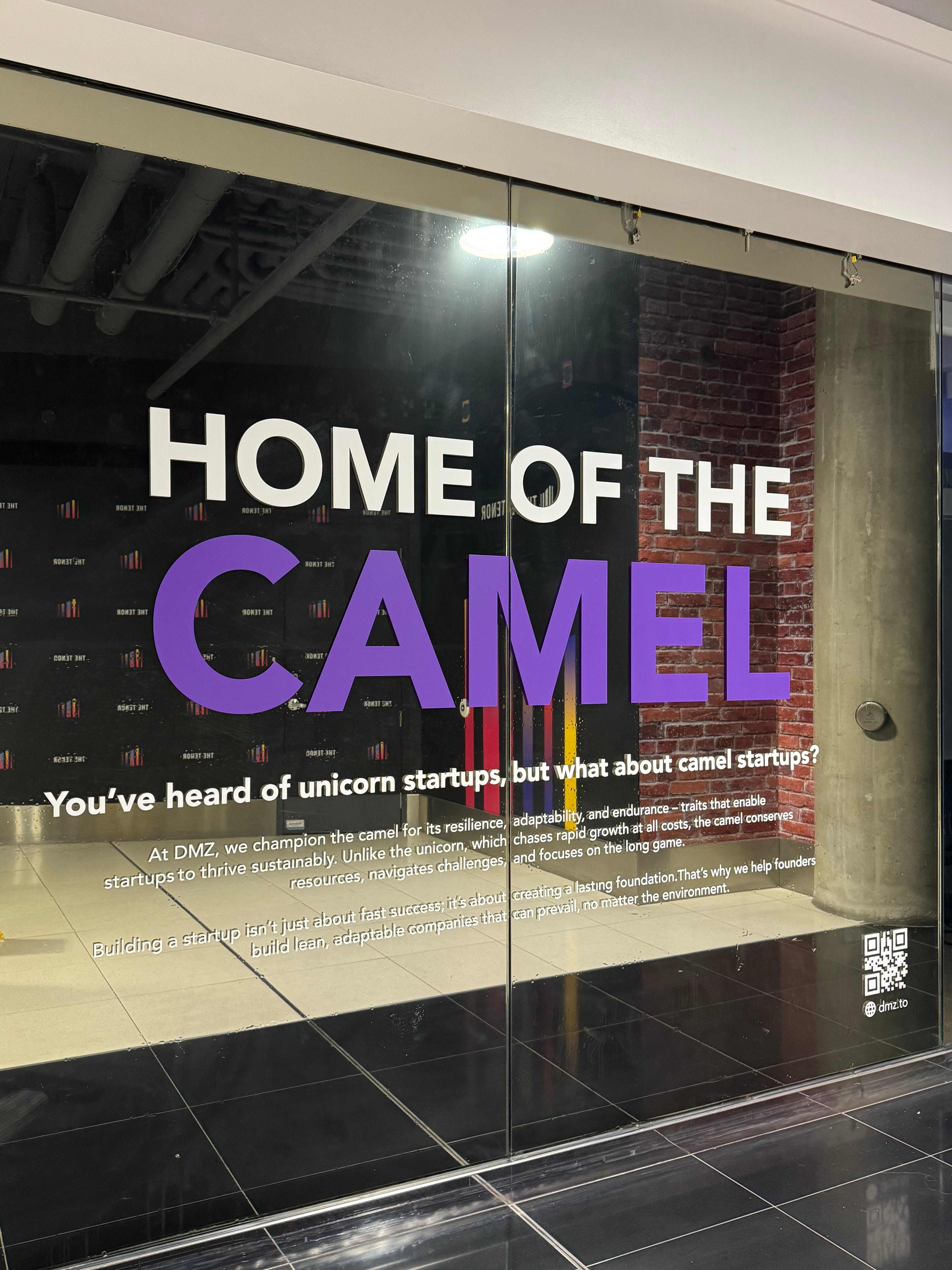
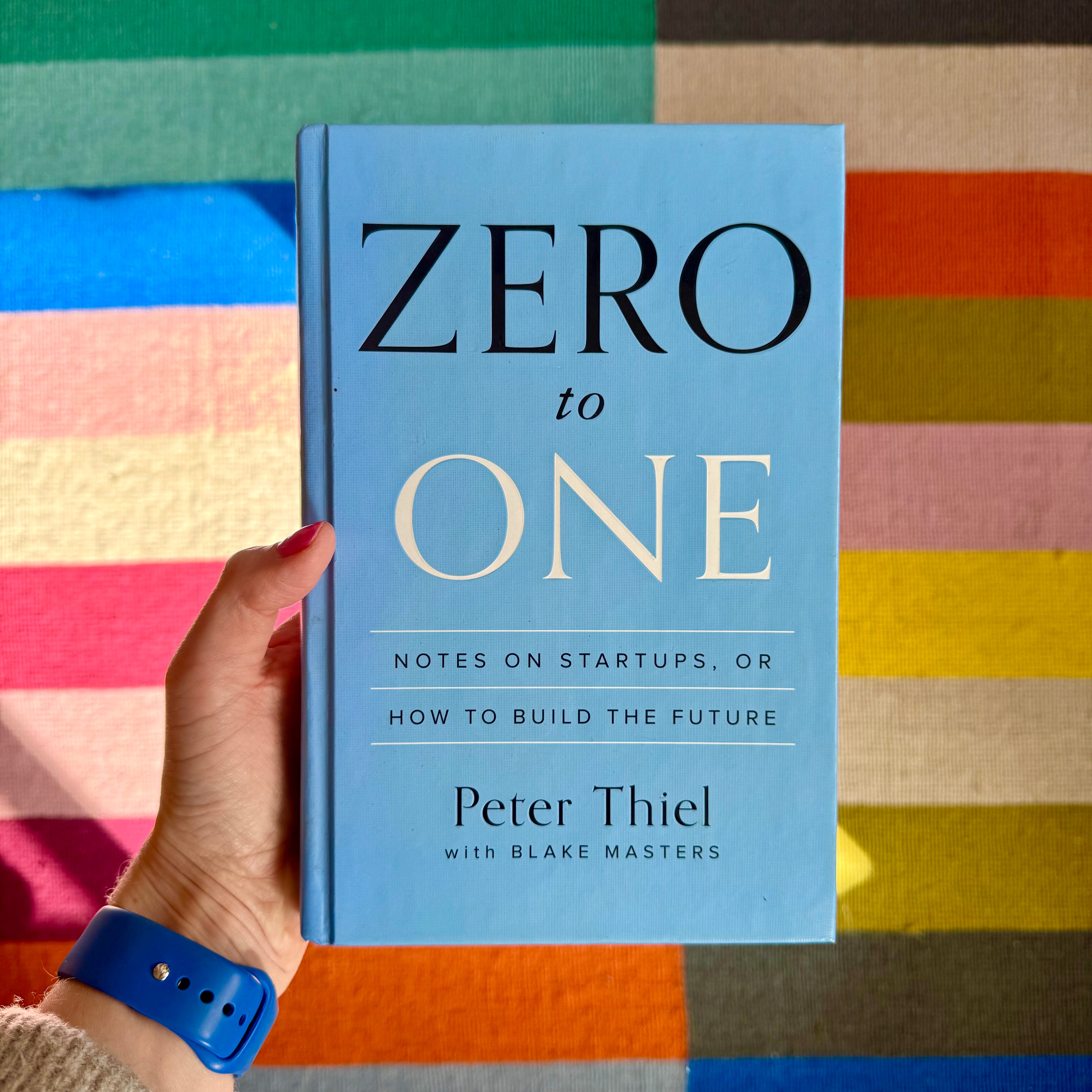
I was floored, and I immediately sent it to Meg. Meg and I are always talking about helping climate tech companies become unicorns. But the unicorn concept is one of those delusional, destructive Silicon Valley ideas — all Peter Thiel-style monopoly culture, startup Darwinism, survival of the biggest. Why did I ever think unicorns were cool?
What’s exciting about the idea that out of a cohort of startups, only one will make it big and squash the rest? Who wants to live in that world?
Maybe there’s nothing we can do about the Silicon Valley tech scene (it seems to have been taken down a notch or two recently anyway), but we don’t have keep talking about unicorns in climate tech. The unicorn model is fundamentally at odds with climate tech for two reasons. First, solving the climate crisis will require many solutions to succeed — across sectors, geographies, and a mix of public and private players. Second, the idea of one company growing aggressively to dominate the field is, in itself, unsustainable.
Sustainable refers to that which can be sustained. Something that generates a reasonable profit to keep itself in service, gives real value to real people using it, adapts strategically to the world around it, doesn’t attach its whole self to products or processes that may not survive, doesn’t need constant emergency infusions from investors hoping for a future payday, doesn’t need to rush an IPO so its founders can cash out — you get the idea. A truly sustainable business requires asking yourself: What would it look like if we wanted this company to last 50, or 75, or 100 years?
In 50 years’ time, we want climate tech as an industry to be a wide-ranging herd of camels, not a small handful of self-obsessed unicorns. We don’t want a single provider in each niche monopolizing the market. We want a massive ecosystem of products, services, and public goods that complement and compete with each other to bring us an abundant future.
To get there, climate tech founders need to stop chasing unicorn status and start thinking like camels.

What are the secrets to thinking like a camel?
Make two plans: one for the long term and one for the short term. Startups need a plan beyond the next quarter or next funding round, but focusing only on the long term is equally narrow-minded. Climate tech changes quickly, and founders and marketers need to be sensitive to the changing tides without going all-in on short-term developments.
Focus on getting to self-sufficiency as soon as possible. Unless you’re in deep tech and have to stay leashed to the deep pockets for many years to come, it’s worth thinking about the quickest way to wean your company off the exhausting but addictive VC cycle. If you really want to build a camel, becoming self-sufficient is the ultimate goal.
Build a brand! Markets change and products follow, but brands are (effectively) eternal. Yes, you need short-term (typically paid) marketing to drive lead gen, but the best thing you can do for your company in the long term is to become a name people like and trust. In our world, this comes from getting really, really good at a particular content channel (or two, or three!), and sticking at it.
Making strategic alliances. The Silicon Valley model might want you to see your peers as competitors, but a surprising number of them won’t be direct competitors. Even when they are, the opportunities for collaboration are endless, and rarely something to worry about. We’ve always encouraged our clients to collaborate with clients, research partners/foundations, investors, adjacent companies, and even ‘competitors’. From a marketing collaboration standpoint, the best potential collaborators are those ‘competing’ with you on content topics/keywords but not on product. Team up and double your audience!
Resist the temptation to copy. The more you copy your peers, the less distinguishable you become, the more squashable you are by the big players. Your product doesn’t have to do everything, and your audience doesn’t have to be everyone. Much better if it doesn’t — but the temptation to expand horizontally rather than vertically is real, and requires disciplined resistance.
What we’re curious about this week
📚 Book: Empire of AI, by Karen Hao — A book tracing the wild personal and professional journeys of the ghouls running OpenAI. This is more than I ever wanted to know about the world of the big AI startups, so I’m slowly getting through it, but Hao does a great job at weaving some incredibly compelling narrative between deeper dives into the history of artificial intelligence and the bigger questions it poses. (P.S. The link will take you to the audio version, which I’m listening to. I broke up with Audible and joined Libro.fm, which supports independent bookstores.)
📖 Article: Zero-sum Thinking and the Labor Market — I’ve just discovered Kyla Scanlon and can’t get enough. A penscive, whip-smart Gen Z economist with a knack for placing the current moment within its broader historical context. This article in particular explores what it’s like to enter the labour market as a young person today.

🎙️ Podcast: Jeff Daniels on the Enemy Within — I’m currently obsessed with Nicolle Wallace, and this conversation with Jeff Daniels is exactly the kind the world needs right now. I should’ve known the man who played Will McAvoy on-screen had to be something like him off-screen, but this podcast really was a joy to listen to. On a related note, if you’ve never watched The Newsroom, this is your sign to go and do it.
What we’re working on
👉 A book proposal! Not for us, unfortunately (someday!) but for a thought leader in a particular climate tech niche. We don’t normally get to write books for our clients, but when this one came along, I (Amelia) jumped at the chance.
Ways we can help 🫶
🎯 Need help building an organic lead-generating machine? → See our lead gen services
📥 Want to know what’s trending in the world of sustainability reporting? → Download our free PDF: 2025 State of Sustainability Reporting
📣 Share this with your climate tech marketing team