

Most of the great leaps in human progress share one thing in common: empathy.
Empathy is not a uniquely human trait (many animals are capable of it, my dog excepted), but human ingenuity and our instinct for collaboration mean that we can put our empathy to work in ways and at scales that other species can’t. We can invent vaccines to save the lives of billions of children we don’t know, institute progressive tax codes, and campaign for environmental reform in the name of future generations we will never meet.
To turn the climate crisis around, we need empathy.
We need people to care.
But one of the tragedies of climate change (and many other current issues) is that we just can’t seem to get enough people — or maybe enough of the right people — to care.
Recently, I attended the Byron Writers Festival, which began on a soggy Friday and never got further than that thanks to the rain. Still, Friday morning, I managed to catch a panel on press freedom with Erik Jensen (The Saturday Paper), Peter Greste (Google him!), and John Vaillant (Fire Weather).
I arrived late and strained to hear from the back of the tent, my brand new white shoes sinking into the mud as I furiously typed notes on my phone. The conversation was wide-ranging, but I perked up when Jensen declared:
“Journalists have failed to get people to care about climate change.”
True.
Also, harsh. Getting people to care about climate change is massively difficult.
Even the most seasoned political campaigners, NGO marketing teams, and Hollywood storytellers haven’t, for the most part, cracked the code on widely appealing climate messaging — certainly not when it asks people to feel uncomfortable or to give up anything of real substance.
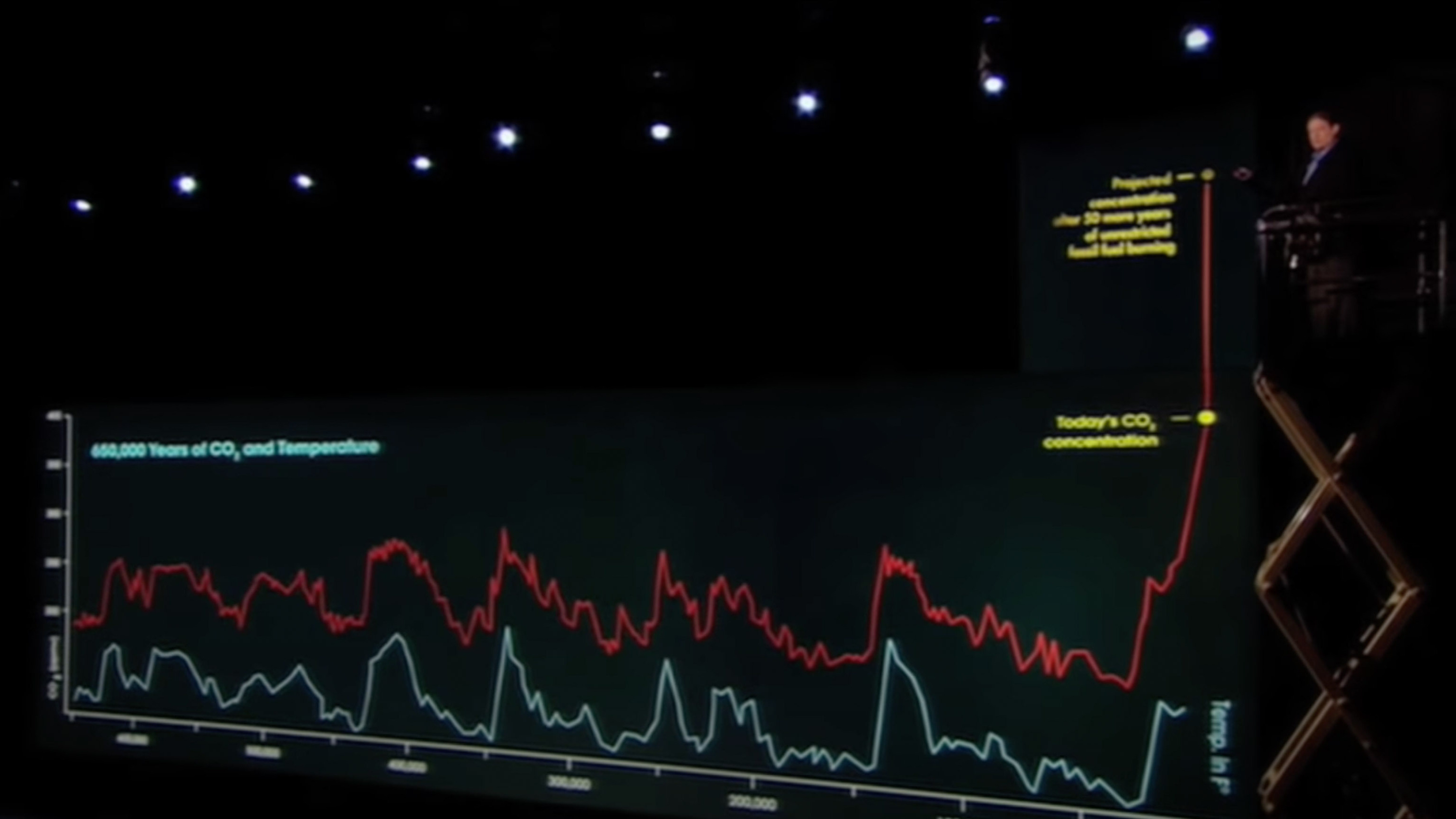
Sure, there have been victories — Rachel Carson in the 60s (although that took a while), Al Gore in 2006 (I will never shake the image of Gore riding up in his little lift to keep pace with his carbon graph), even Greta Thunberg’s defiant, childlike face in 2018.
But climate change as a matter of public concern almost always falls back into what has been dubbed the issue-attention cycle. Some new disaster prompts people to get all riled up about it for a hot minute, and then nothing particularly exciting comes of it, the world still turns, and people go back to their lives. We may win the occasional media battle, but we seem to be constantly losing the war. It is really, really hard to get people to care about a long-brewing and long-lasting problem for more than a blip in time.
Part of this is practical. People have so many other things to worry about in the course of a day; I’ve written about this before.

Part of it is cerebral. It’s hard to get people to care about bees or polar bears or Greenland ice sheets. All of it seems impossibly remote; none of it seems all that close to home.
Part of it is — I’m convinced — linguistic. It’s also hard to get people to care about random climate terminology: what does 1.5° mean to the average person? Not a whole lot. Same goes for climate migration, global ‘warming’ (how nice!), weather ‘events’. The more we turn verbs into nouns and stories into buzzwords, our message loses its urgency. Photographs have been far more powerful than words for the climate movement, but again, you can only see a hungry polar bear or a parched giraffe once before the horror wears off.
But a huge part of the problem is simply the fact that climate change is a problem of such enormous scale that it’s hard to fathom, let alone care about every implication.
Humans have not yet evolved to handle caring about this kind of scale. We belong in families and villages — not planets. Sure, with enough education, reason, and patience, we can all grasp at some level why global problems are worth getting riled up about. But it doesn’t come naturally. (And that means it’s far easier to dismiss it as someone else’s problem or call it a hoax.)
What does come naturally is stories of one person, one family, maybe — if you’re lucky — one community. But beyond that, it’s hard to care about what your mind simply can’t imagine. We can’t hold space for empathetic feelings about an entire planet in our minds at once.
So what most climate and environmental campaigns are missing is the one thing humans need in order to actually care about something. The one thing that can’t be turned into a bipartisan debate or dismissed as fake news or alternative facts.
What’s the one thing?
In the words of John Vaillant, the one thing climate change stories are missing is:
“The unimpeachable evidence of the person who was there.”
That’s why Vaillant’s latest book, Fire Weather — a tragically ironic book about a Canadian oil town ravaged by a wildfire — spends most of its time among the residents of the town and much of its word count between quotation marks.
Vaillant’s goal in writing the book was largely to get out of the way of the people whose story it was to tell. And it works!
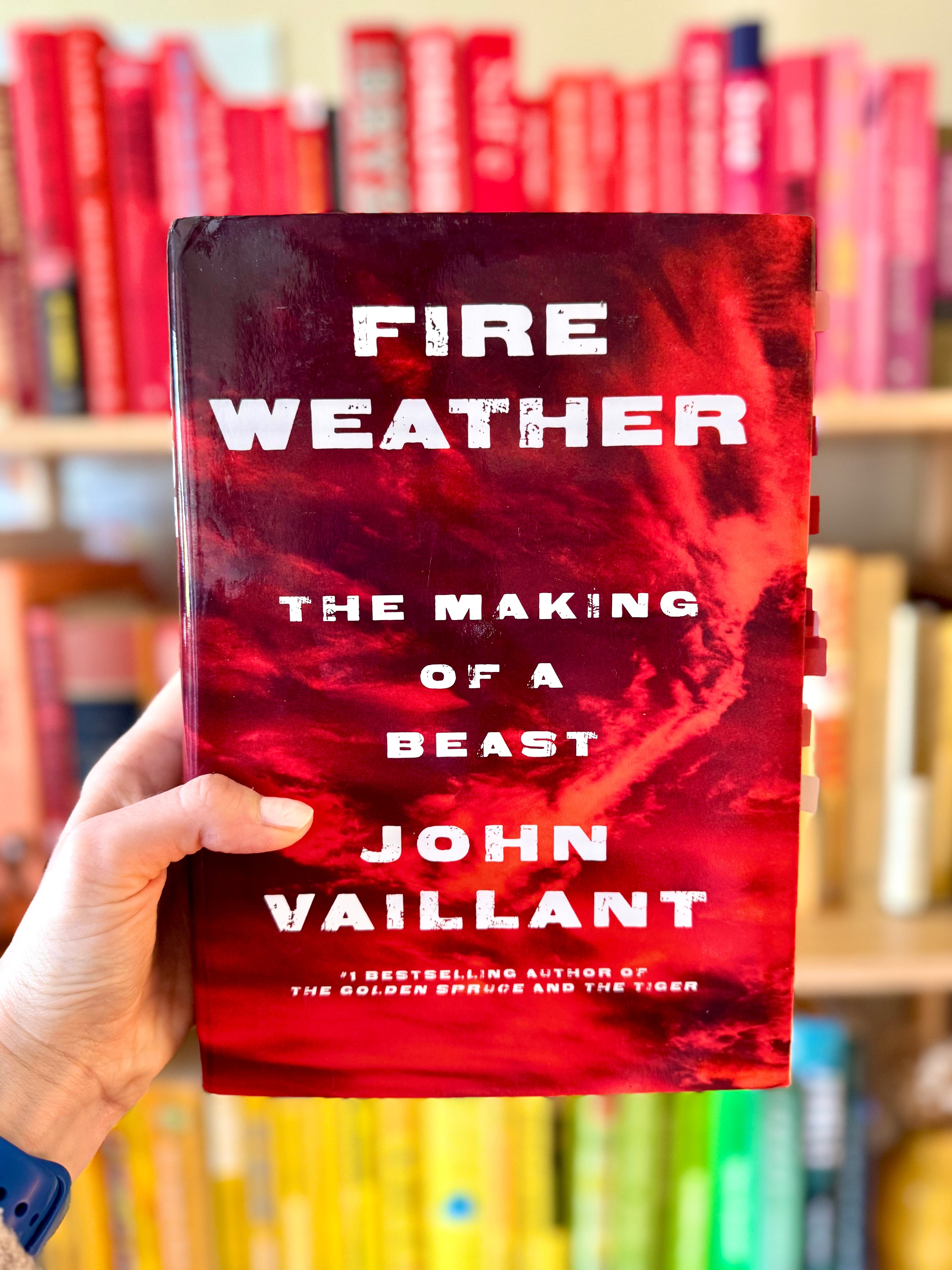
Anyone who has read the book can no longer see statistics or headlines about wildfires in the same way. Now they sense, on a deeply human level, what it might mean to live through something like that.
The unimpeachable evidence of the story told firsthand is a powerful tool, and I don’t see climate campaigns capitalising on it enough.
It’s not just limited to narrative nonfiction books: we should be using first-person stories, told by real people, in every medium we have. Photos, articles, videos — even a simple headline snippet taken from a true story will work.
Zipping our own mouths shut and handing the microphone over to the people hit hardest has got to be the most underrated tool in the climate storyteller’s toolbox.
Too few people are using it.
Time to change that.
What we’re curious about this week
📚 Book: The Economic Consequences of Mr Trump, by Philip Coggan — a teeny tiny book that punches well above its weight (or length?). Debunking Trump’s absurdity with reason and (importantly) facts is both satisfying and infuriating. The most frustrating part is looking up from the pages and realising that no matter how much sense it makes in your lovely little book, Trump and his cronies just don’t care. They don’t want reason; they want slogans and chaos. They are fuelled purely by resentment and tax cuts (for their friends), and reason has no place in any of it.
🎙️ Podcast: Trump vs. the U.S. Economy — a perfect week for me, with Ezra releasing this episode just as I was cracking open Coggan’s little book. Natasha Sarin, a Professor of Law and Economics at Yale is a wildly impressive guest and a highly compelling speaker. The exchange between these two is highly productive and well worth a listen.
What we’re working on
👉 Carbon markets report: With all the negative headlines out there about the VCM at the moment, we’re working on a report for a client about early-stage carbon project quality assessment.
Ways we can help 🫶
🎯 Need help building an organic lead-generating machine? → See our lead gen services
📥 Want to know what’s trending in the world of sustainability reporting? → Download our free PDF: 2025 State of Sustainability Reporting
📣 Share this with your climate tech marketing team