

It’s been a big two weeks — for climate action, for the world, for Meg and me.
Meg is fresh off the plane from NYC Climate Week, where she had an overwhelmingly positive time and took a handful of underwhelming photos (come on Meg, think of the newsletter!).


Meanwhile, just down the road, the President of the USA began his deranged, hour-long ramble about marble floors, broken elevators, and ‘green scams’.
It would be funny — Trump can be very funny, both intentionally and unintentionally — if he was just some guy ranting on a street corner with a billboard.
If only.
Meg and I launched this newsletter because we’re interested in what goes wrong when we try to talk about climate change.
This week revealed just how broken the climate topic is.
Why, after decades of effort to move the general consensus from denialism to uncertainty to acceptance, can we still not get good people to care?
And why, after moving from denialism to ‘new denialism’ (where everyone, even fossil fuel companies, claim to believe in the science and pay lip service to net zero while doing nothing about it), have we now regressed back to old-school outright denialism?
Why is it once again either an existential threat or a total hoax?
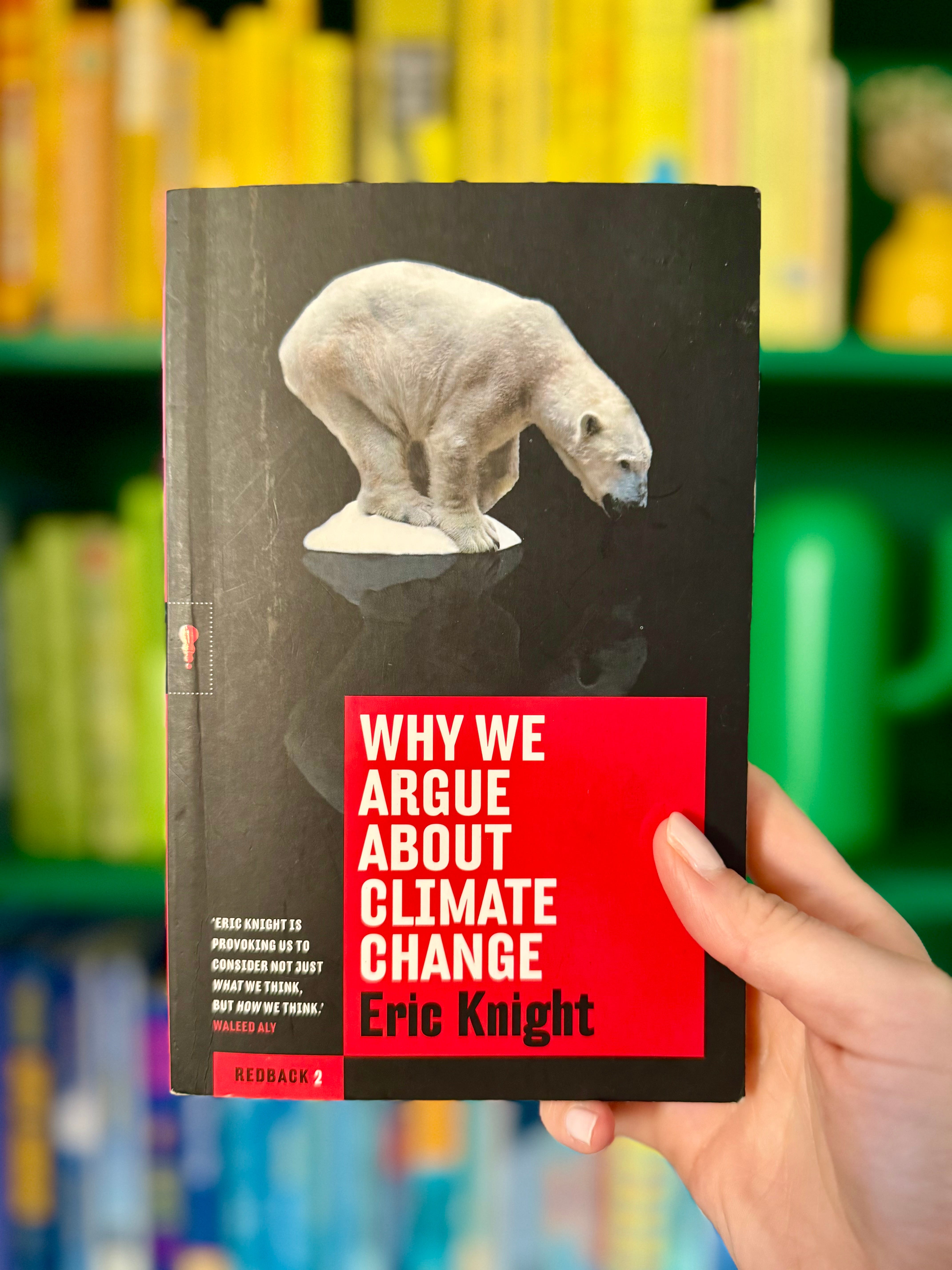
This is what I was thinking when this little book arrived for me in the mail. It’s a book that would now be considered old — it was published in 2013.
To set the scene, that means: Russia, Canada and NZ had just exited the Kyoto Protocol, which was already largely viewed as a failure. Copenhagen (2009) was another diplomatic climate failure. The US, and much of the developed world, is slowly rebuilding after the Great Recession.
International agreement on climate change looked and felt a little like it does today, in the wake of Trump's bizarre UN speech — broken, confusing, bleak.
So what this book says about why climate seems to divide people so strongly is worth reading, even if it is now considered an ancient text.
Let’s have a look.
The same old divide: degrowth vs. green growth
What came up in Trump’s recent speech is a key thread in this book: the arguably false equivalence between degrowth and green growth.
When Trump calls climate action a ‘scam’ and suggests it will ruin economies, he is echoing the degrowth argument — the idea that climate action inevitably requires slowing economic growth.
In this respect, he shares ground with his biggest nemesis, the so-called “radical Left,” who argue that degrowth is the solution and that growth of any kind is inherently exploitative.
Knight pushes back on this false equivalence by pointing to the long history of failed doomsday prophecies, notably Thomas Malthus’s prediction that population growth would outstrip resources. Malthus was proven wrong because technology unlocked new ways to support far larger populations than seemed possible at the time. When innovation raises productivity and efficiency, we can work within the limits of a finite world without limiting people’s opportunity to improve their material well-being.
Much of today’s climate debate, Knight argues, stems from the mistaken belief that climate action requires constraining growth. The book was written twelve years ago, but the divide is still recognisable: opponents say it’s too expensive; proponents argue that inaction is what really carries the highest costs.
Knight believes the most powerful path forward is to make this “third way” argument louder — showing that climate action and prosperity can go hand in hand. That, he suggests, is how to bring the majority on board.
I think he’s probably right. Most people will only support climate action if they believe it improves, rather than reduces, their material wellbeing. That’s why I see ‘Abundance’ as a more successful recipe than degrowth for winning broad support.
But in today’s political climate, even the green-growth case struggles to cut through. No matter how much data we marshal, the issue is so polarised that it’s hard to move people right now.
At least in US politics, the fragile middle ground of the past decade has all but disappeared. The debate is no longer about which solutions work best with the least disruption. You’re either all in or all out.
That’s a big problem for climate action, but it’s looking less and less likely that we’ll be able to change the narrative anytime soon.
Is it really about the science?
Another key thread the book unravels is the idea that one side of the climate debate favours the science, while the other rejects it. On this, Knight articulates something I have felt for a long time but struggled to express: neither the Right nor the Left is actually engaging with the science in a rigorous way. Few are actually following the data. Most are following their beliefs.
Meg and I work with a lot of scientists, but we’re not practising scientists ourselves. When the IPCC releases its latest findings, we’re not critiquing the methods or rerunning the models. We’re placing our trust in the scientific process and the institutions behind it — just as MAGA voters place their trust in Trump or in the fossil fuel lobby.
Here’s Knight in his own words:
“While we pretend that the climate argument is about who is a believer and who a sceptic when it comes to the scientific evidence for climate change, this doesn’t really make sense. Too few of us are expert scientists to credibly debate the details. I want to suggest that what we are really arguing about is the role science should play in how we are governed.”
And that’s the crux of it.
On one side, the so-called “science believers” want policy to be rooted entirely in science. On the other, people want other values — sovereignty, freedom, jobs, whatever it may be — to have equal weight.
Knight’s argument is that while scientific evidence should inform policy, the actual design of policy belongs to elected leaders who represent the will of their constituents.
Basically: no matter what the science says, if the people don’t want it, it shouldn’t happen.
What an uncomfortable idea — particularly for those of us on the left who profess equal loyalty to science and democratic ideals.
I’m thinking about this a lot now.
If we claim to be on the side of democracy (remember the 2024 election, anyone?), then we also have to accept that democracy means advancing what the public wants — not just what experts say is necessary.
And if that’s the case, then the difference between an electorate that votes broadly in line with science and one that sees science as a hoax probably comes down to something very simple and very complicated: education.
Education standards are declining across much of the developed world. Beyond formal schooling, people struggle to read critically, to focus, to sift through noise.
We agonise over why so many vote against their own interests. The reality is many don’t have the educational foundation or mental frameworks to see it differently.
In today’s tech-broligarchic world, fixing education and keeping people genuinely informed may be harder than fixing climate change. Individually, the prescription is obvious: turn off social media, engage with deeper sources. Systemically, the challenge feels almost overwhelming.
Climate campaigns in an algorithmic world
What I do have to think about is how climate communications can get traction in a world where deeper conversations are less appealing, where education levels are slipping, where trust in institutions is thin, and where gut feeling and tribal loyalty often override reason.
That means climate campaigns can’t assume a rational audience weighing evidence like scientists. (More than likely, they never could.) They have to cut through the noise of chaotic, algorithm-driven feeds — short, emotional, and shareable — without losing the integrity of the message.
Somehow we have to discuss incredibly complex ideas in a language that resonates in seconds, all the while still pointing to the depth and urgency of the problem.
There is no way around the current state of information consumption. I wish we could all sit around drinking tea and discussing books, but alas. If climate action is to win mass support, communicators have to meet people where they are, not where we wish they were.
What we’re curious about this week
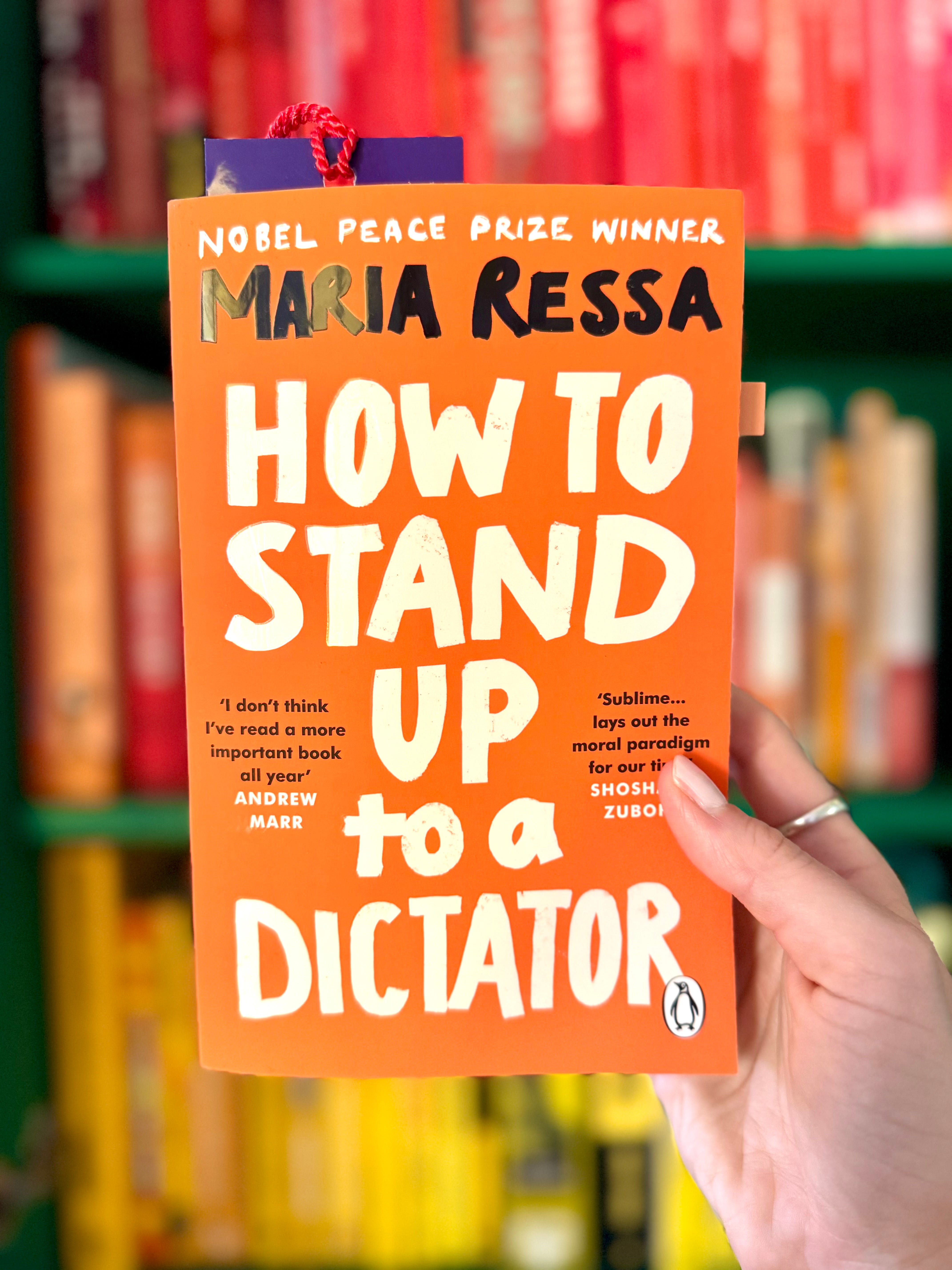
📚 Book: How to Stand Up to a Dictator, by Maria Ressa
If you don’t know Maria Ressa, she is a Filipino-American journalist currently facing life sentences from the Philippines’ corrupt and autocratic president. She is a Nobel Peace Prize Winner and a stunningly brave individual. The early parts of this memoir grated on me a little; I felt the same reading Dr Fauci’s memoir — there’s only so much “I was a gifted child, I was good at everything, I didn’t know which scholarships to choose from!” a girl can take. Still, Ressa is one of the bravest and most uncompromising voices of today, and this book is well worth a read.
🎙️ Podcast: Why Are We Getting Dumber? A Debate — Deep Questions with Cal Newport
I’m obsessed with the data on intelligence scores. I want to know why intelligence appears to have peaked in 2012 after decades of steady climbing upwards. This episode of Cal’s podcast breaks it down nicely, although not conclusively. I think it’s an important listen, both to understand what’s happening and how you might personally avoid taking part in the decline.
What we’re working on
👉 Event content: We’re working on a big piece for a client in the EU region. We’ve been working with this client for a while now, and we’ve found that their industry’s key annual conference is an ideal time to release an event-related lead magnet. Last year’s report led to $120k in deals won — let’s see if we can do it again!
Ways we can help 🫶
🎯 Need help building an organic lead-generating machine? → See our lead gen services
📥 Want to know what’s trending in the world of sustainability reporting? → Download our free PDF: 2025 State of Sustainability Reporting
📣 Share this with your climate tech marketing team
Working in environmental comms with a reluctant team who attend lots of conferences, Meg’s wonky/backlit/backs of heads photos are painfully relatable 🙂